
The Ace Up One's Sleeve
References
2 helmets
A Strategic Shift in Thinking as the Key to Success
Here you’ll find testimonials from clients who have worked with me on both project coaching and the curriculum—or both. At the bottom of the page, you’ll find insights into the key business metrics of a company that has been using the 2 helmets method for five years—two of those years under my guidance as a coach.
- Industry
Aviation
- Leadership
CEO (m)
Emergency Coaching
Curriculum
CLI
“The coaching sessions with Mr. Hensel showed us why we lost projects in the past and how we could have won them. The exercises involving a retrospective analysis of projects we won and lost were eye-opening. Today, our company focuses more intensively on position analysis and the fundamentals of our strategic approach before sales plans are formulated. We’ve already noticed a new mindset among our employees and are seeing a new way of working in competitive situations. With Mr. Hensel as our coach, we were able to win 2 out of 3 major projects. From our perspective, this was a significant corporate success.”
- Industry
Pharma
- Level
Sales VP (f)
Emergency Coaching
Curriculum
CLI
“I started working with Markus at a time when I was navigating a highly political environment that was draining my energy. What I appreciated from the very beginning was that he created a safe space for honest, direct conversations without sugarcoating reality. His coaching helped me take a step back, understand what was really happening, and make decisions based on facts rather than assumptions.
Our initial goal was to improve the situation internally. After a few sessions, however, it became clear that a well-planned exit was the better strategic choice—and Markus helped me make this transition with confidence.
I was really impressed by how quickly he grasped the complexity of the situation. Through thoughtful questions, he uncovered the underlying dynamics, motivations, and power structures.
Some of the most important lessons I still apply today are:
Reading the room
After our sessions, I had much more certainty that I could read the room – understand politics, competency gaps, power plays, and choose my strategic moves accordingly. I could think more strategically about alliances, negotiations, or when it was simply time to move on.
Political clarity
I became much better at identifying where real authority existed, where people were simply acting as authority, and where energy was being wasted. That clarity changed the way I approached difficult situations.
Energy management
One of the biggest lessons was learning to invest my energy much more consciously. Instead of trying to fix everything, I focused on the few activities that created the highest value and the greatest clarity. I still use this principle today, both professionally and personally.
Negotiation
Markus helped me prepare negotiations by defining clear targets, understanding my walk-away position, developing supporting narratives, and, most importantly, having the confidence to hold my ground.
Looking back, the greatest value was learning how to see situations more clearly and invest my energy more intentionally. I still apply these lessons in business, leadership, and life today.”
- Industry
Software Industry
- Leadership
BU Lead (m)
Project Coaching
Curriculum
CLI
“I participated in the ‘Competitive Strategy’ training program, but I also worked alongside my colleague Mr. Hensel as a coach in the project business. Therefore, my feedback draws on my experience from both of these initiatives. However, I will try to focus on the training program.”
In summary, I can say that today I (we) plan and implement our business-critical projects using Mr. Hensel’s methodology, and the results demonstrate the effectiveness of this approach.
We started with five workshops on theory. None of the topics were rocket science; everything was clear and easy to follow. However, the context Mr. Hensel created—involving competitive situations, developing a winning strategy, leadership qualities, and disillusionment—was something completely new to me. What particularly sticks in my mind is that defense is not a weakness, but rather a strategy—a portfolio element for winners. It took me some time, given my background—both professionally and personally—to come to terms with this idea. In particular, analyzing past projects in which we had acted “as usual” in an offensive manner, when a defensive approach would have been more effective, really helped me in this process.
From my current perspective, the most important thing is to thoroughly prepare the position analysis and facilitate it as a team. This task is anything but simple and accounted for about 60% of the curriculum. It is the central element and plays a decisive role in determining the quality and likelihood of success of our campaigns. All participants appreciated that we focused exclusively on real, current, practical examples. The parallels across different industries were striking.
In my view, the topics of team design, strategy implementation, and adjustments are well-known management skills, but they are essential in the context of “competitive strategy.”
The topics of sensor technology and monitoring were new to me and extremely important. In the past, I had too often relied on statements from our sales team that weren’t truly validated and therefore posed a risk. Today, sensor technology and monitoring are central components of our reviews with sales management.
The 18 months spent on Mr. Hensel’s curriculum required a significant time commitment and a great deal of personal reflection, but they significantly enhanced my management skills in competitive situations and took our ability to handle difficult projects to a whole new level.”
Key Business Metrics of a Success Story
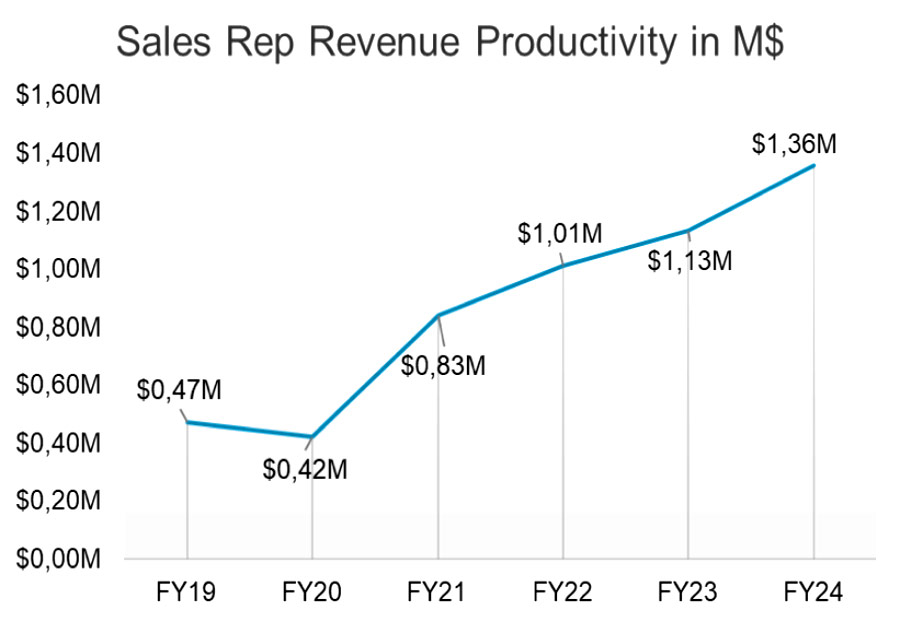
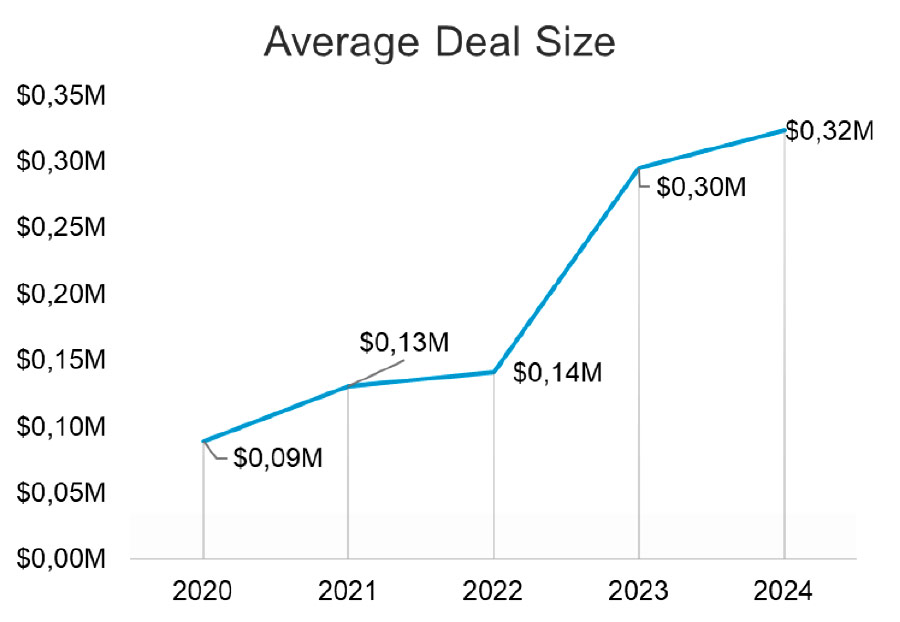
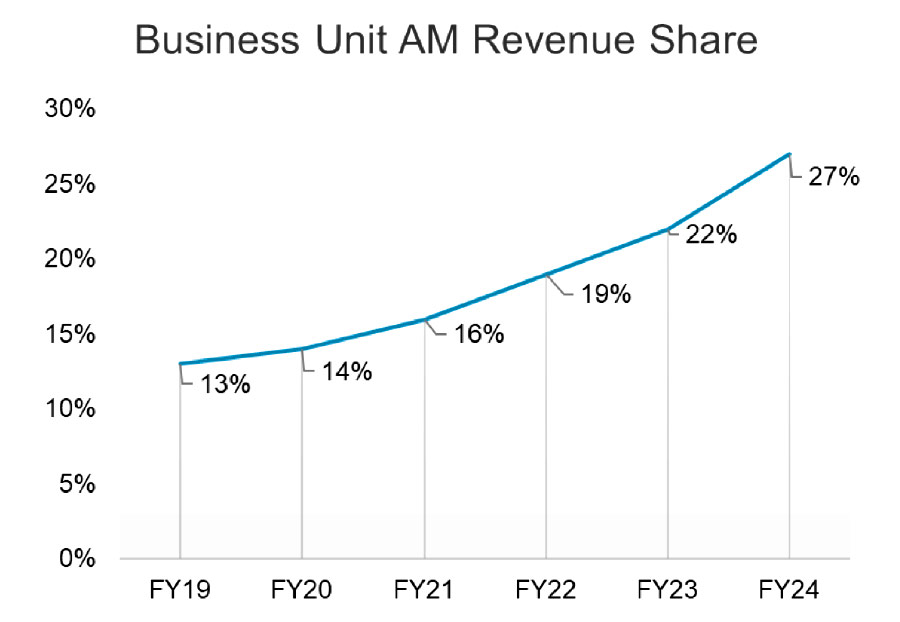
The charts below illustrate the business performance of a business unit that has consistently implemented and put into practice the 2helmets principle. The focus was on two key objectives: a sustainable increase in revenue per sales representative (quota-carrying head) and significant growth in average order size, accompanied by rising profitability. These measures were designed to propel the business unit to the top of its market position, both in global competition and in internal benchmarking.
Overview of KPIs
In summary: Transforming the sales organization unlocked access to larger deals, higher win rates, and ultimately, a stronger market position.
Business Growth – Essential KPIs
KPIs im Detail
Business Growth – Revenue per head
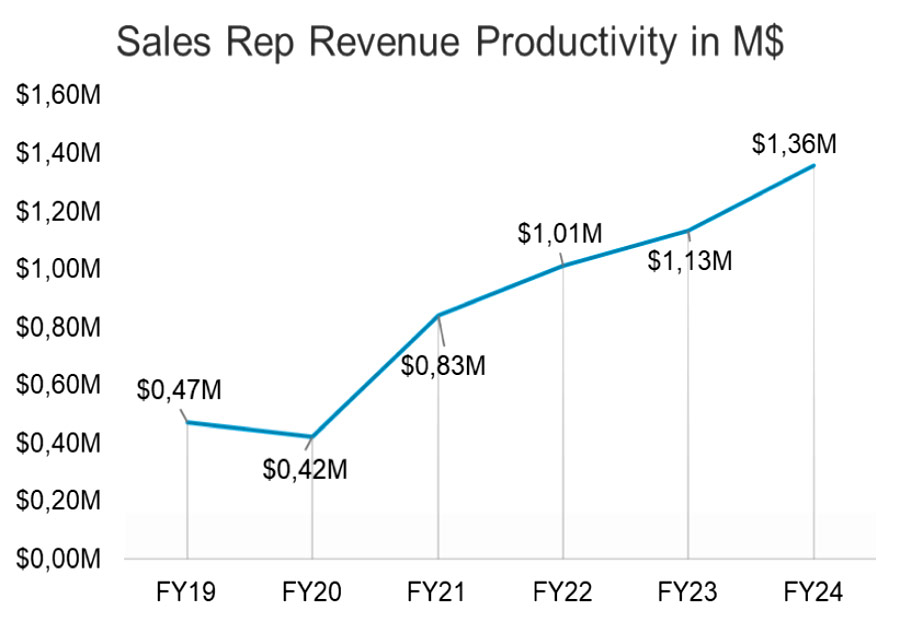
- All sales teams and supportive functions apply a standard sales methodology and 2helmets
- Program 160/9 pushed for designing large deals
- Sales reps generate larger deals and much better qualified pipeline against sales quota (1,4:1 → 3,2:1)
Business Growth – Average deal size
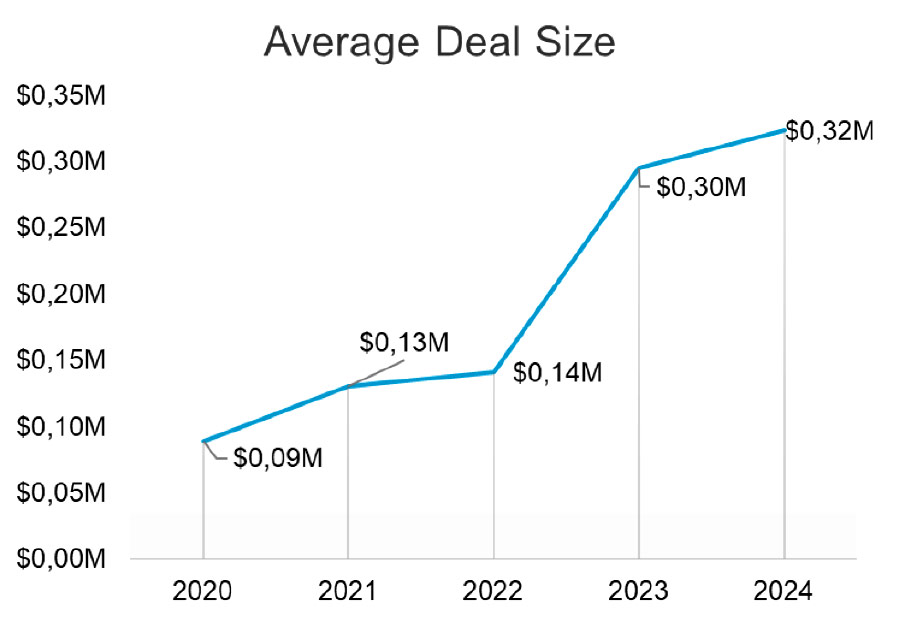
- Think big and winner attitude drove larger deal sizes
- Challenger Sales and 2helmets improved sales professionalism
- Smaller contracts were outsourced to supportive sales units
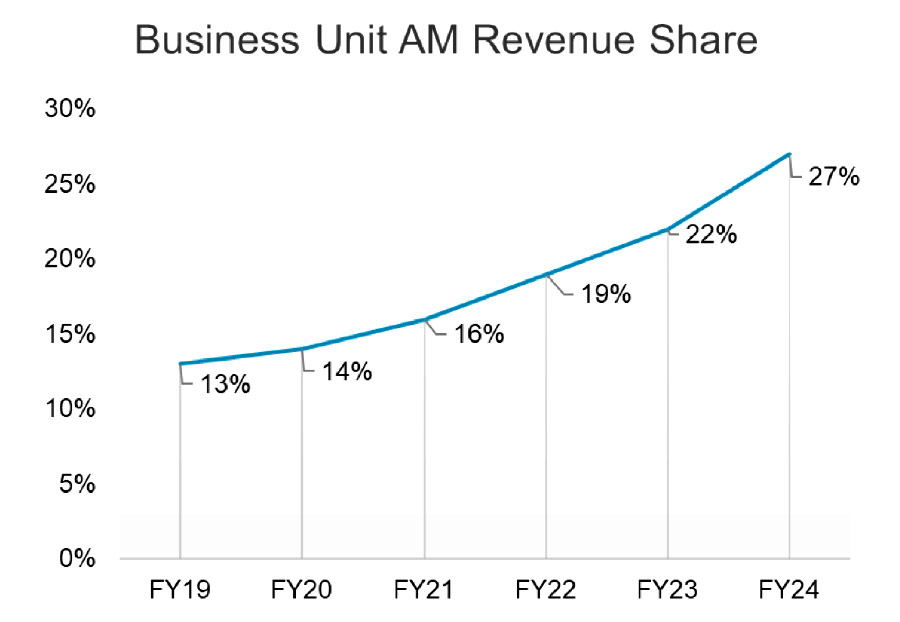
- BU AM grew faster than all other BUs
- BU AM with best margin since FY21
- BU AM with lowest churn rate
- BU AM highest growth rate compared to global competitors